

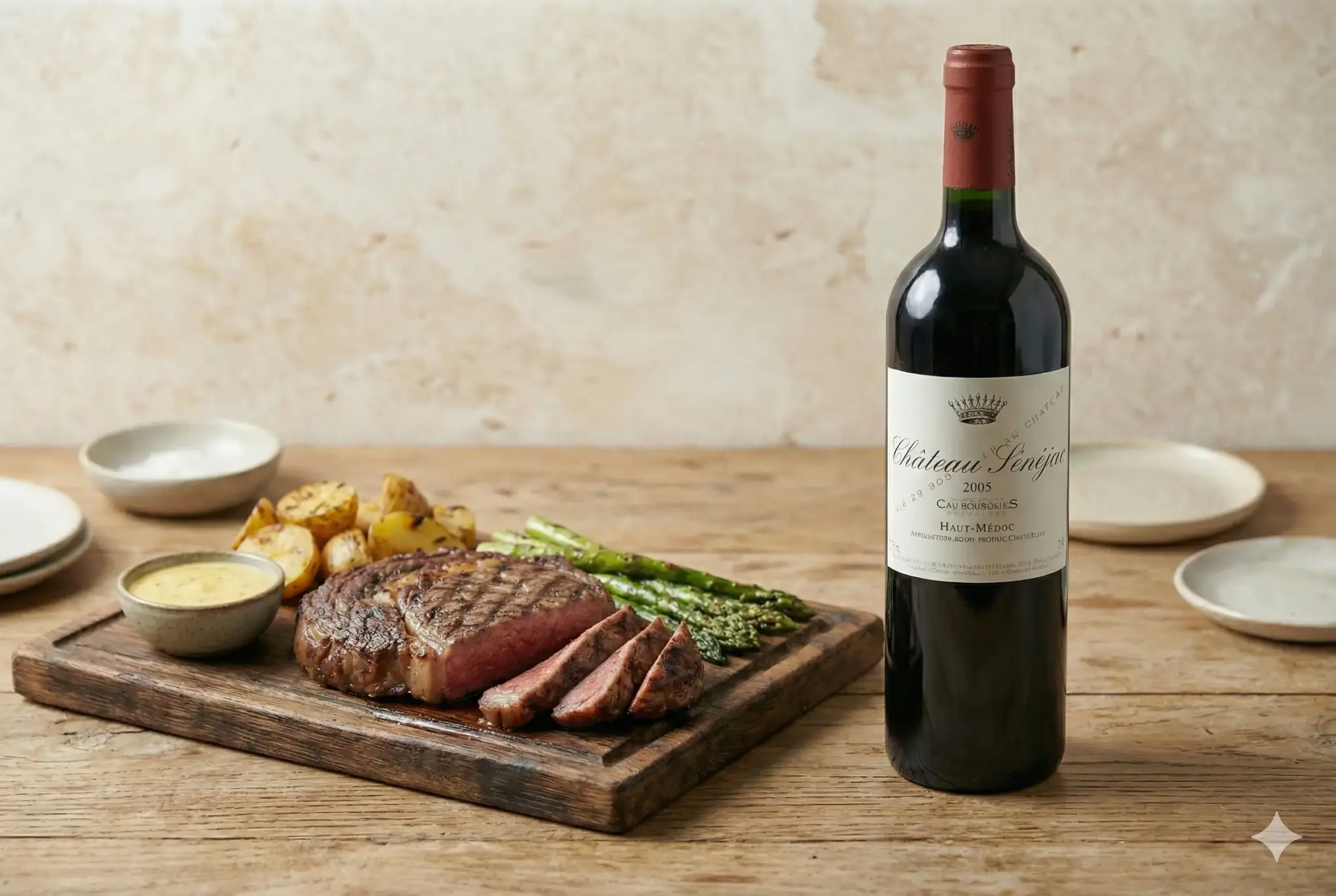
Why steak asks for structure
Beef brings three key elements: protein, fat and roasted flavours. Protein softens how tannin feels, fat rounds acidity — which is why a good red can taste both smoother and longer at the table.
The cut matters, but so does the preparation: rare vs. well-done, the intensity of the sear, and whether there’s sauce. Those details decide if you need backbone or finesse.
For steak, temperature is an instant upgrade: serve powerful reds slightly cooler (around 16–17°C). You’ll get more precision, less heat, and a cleaner match with char.
Two approaches that reliably work
The key is balancing juiciness and tannin.
1. Classic: Powerful & structured
For ribeye, entrecôte and dry-aged: wines with backbone, darker fruit, and firm but ripe tannins.
- Ideal with: ribeye, T-bone, côte de boeuf
- Style: structure, depth, length
- Serving: 16–18°C, give it air if needed
2. Elegant: Juicier, finer, more precise
For fillet, rare steaks, or sauces (pepper, herb butter): less hardness, more lift and polish.
- Ideal with: fillet, rump steak, steak with sauce
- Style: ripe fruit, polished tannin, freshness
- Serving: 15–17°C, large bowl glass
Frequently asked questions
Pepper sauce? Pepper amplifies alcohol. Pick wines with good acidity and polished tannins. Overly “hot” wines can feel burning next to pepper.
Well-done? Less juice, more bitterness from roasting. Choose riper fruit, less aggressive tannin, and serve slightly cooler.
Champagne? Yes — especially with steak tartare or carpaccio. It works through acidity and umami, not tannin.
Operated by Dielen Wines (est. 1901) • Professional EU wine shipping