

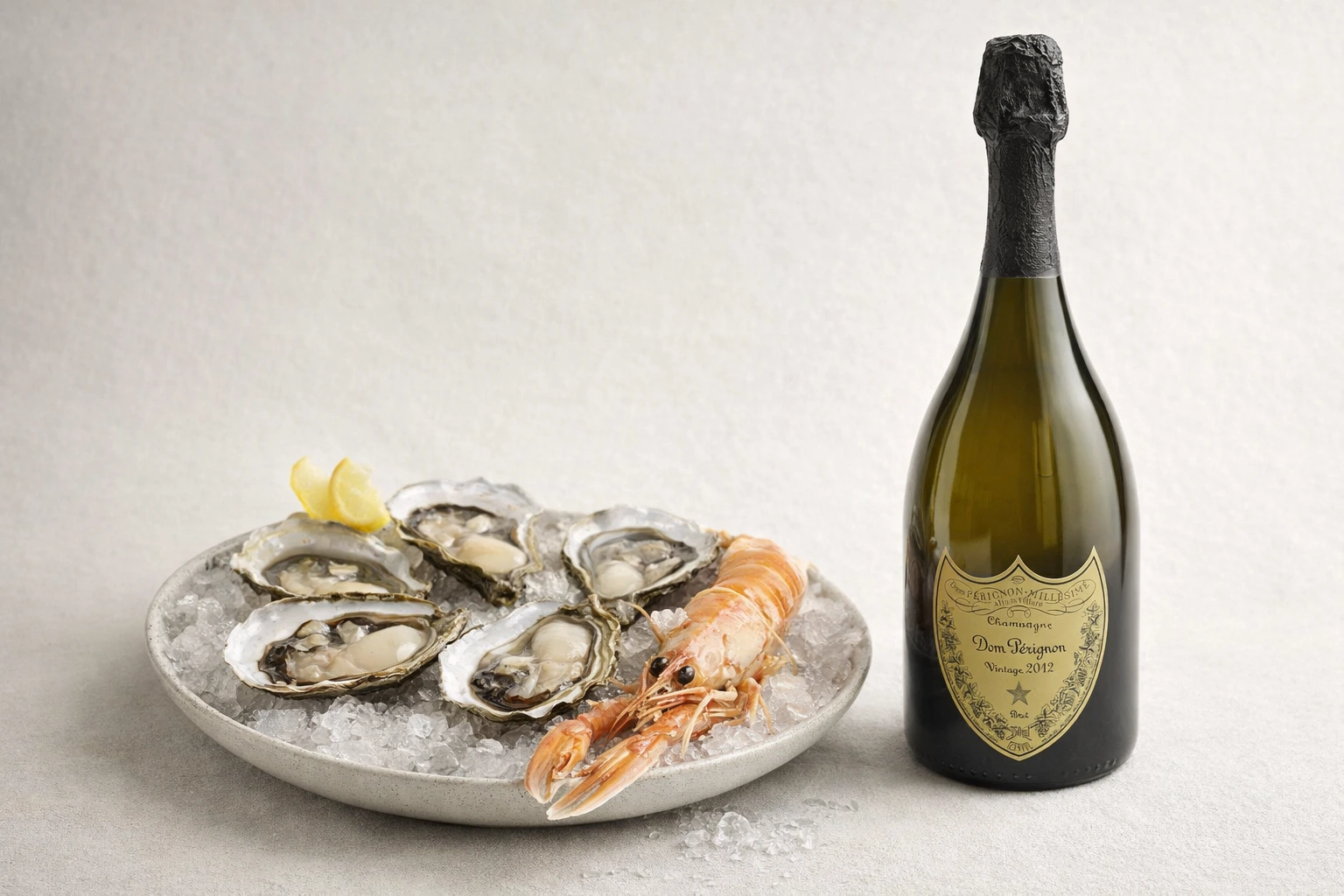
Why this pairing is so unforgiving
Oysters are intensely saline, while shellfish adds gentle sweetness. A great pairing should feel clean and effortless — never heavy, never oaky, and never loud.
In Michelin-level service, the goal is simple: keep the palate bright, highlight the brine, and let the finish stay razor-sharp and precise.
Adding lemon? Choose wines with clean acidity and zero oak. Using mignonette (vinegar)? Go even leaner and fresher. Acidity is your best ally here.
Two styles that always work
One direction is pure and mineral for briny oysters; the other adds finesse through bubbles for tension and elegance.
1. Mineral: Lean & Saline
The classic "oyster moment": crisp acidity, chalky minerality, and a clean finish that respects the texture of the seafood.
- Ideal with: oysters, clams, shrimp, simple shellfish
- Profile: citrus, chalk/flint, minimal oak
- Service: 7–9°C
2. Champagne: Finesse & Tension
Bubbles are functional here: the mousse cleans the palate and the acidity gives the dish a brilliant lift.
- Ideal with: oysters, lobster, shellfish with butter
- Profile: dry (Brut Nature), structured, refined mousse
- Service: 8–10°C (not ice-cold)
Frequently asked questions
The "perfect" oyster wine? Seek a profile: lean, fresh, and clean. Heavy oak or sweetness will overpower the delicate brine.
What if butter or cream is used? Move slightly toward a more textured style — still fresh, but with more depth. Champagne is often the winner here.
Operated by Dielen Wines (est. 1901) • Professional EU shipping