

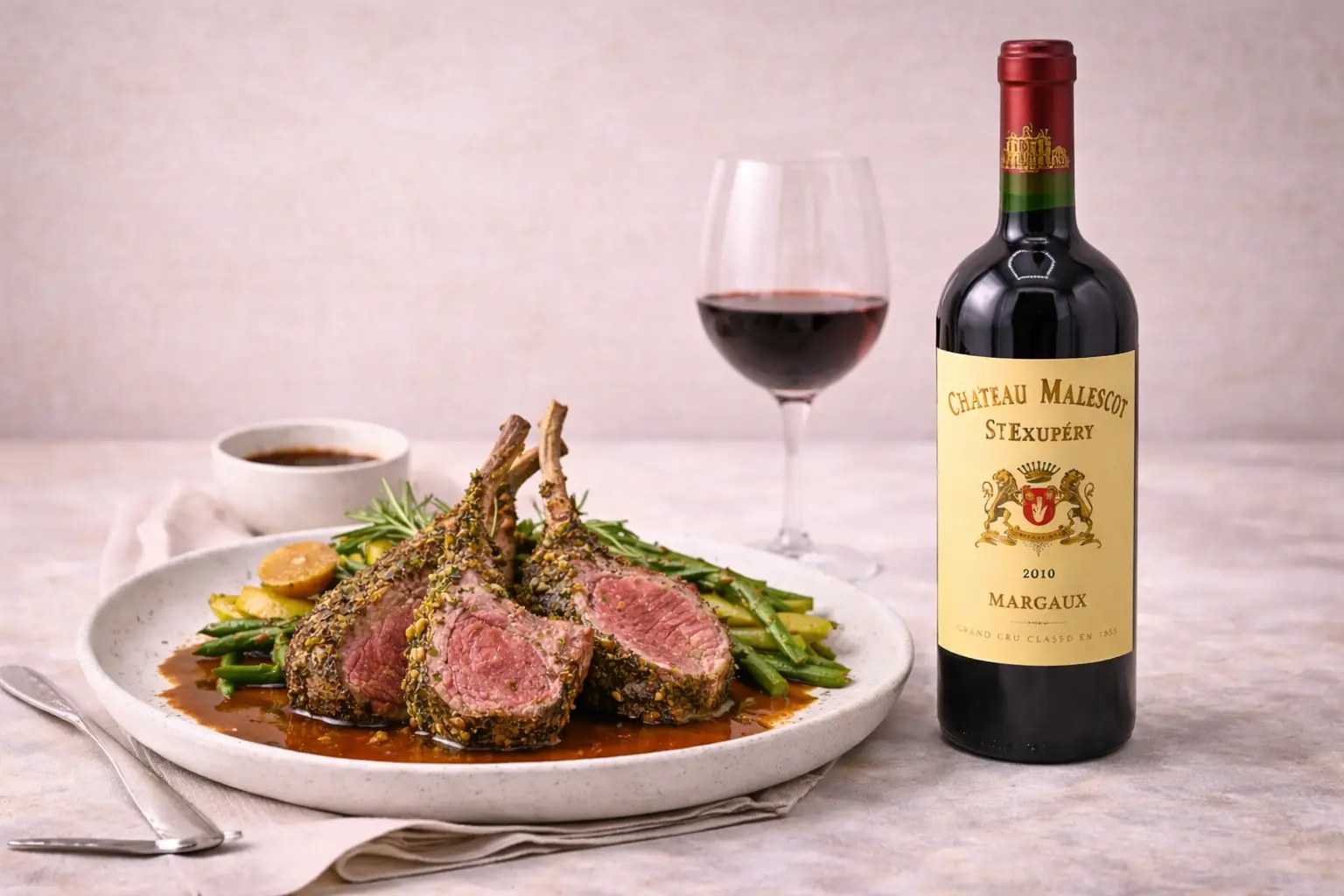
Why lamb is a sommelier’s favourite
Lamb has a natural sweetness and mineral depth—especially with rosemary, thyme, or garlic. Balance is key: too much oak can taste bitter, while too much alcohol can feel heavy.
Think in contrasts: freshness against fat, aromatics against herbs, and a finish long enough to stay with the dish.
For roasted lamb, serve structured reds at 16–18°C. For grilled lamb, go slightly cooler to maintain tension and aromatic lift.
Two styles that rarely fail
From herb-crusted racks to slow-roasted shoulders, these two directions cover most classic preparations.
1. Classic: Structured & Savoury
Supports lamb’s richness and herbs with grip, spice, and a long finish without overwhelming the meat.
- Ideal with: roasted leg, shoulder, herb crust
- Style: savoury, layered, refined tannin
- Service: 16–18°C, consider decanting
2. Refined: Elegant & Fresh
For grilled chops or lighter sauces. Here, brightness and aromatic precision matter most.
- Ideal with: grilled chops, rack, Mediterranean sides
- Style: energetic, aromatic, precise
- Service: 15–16°C
Frequently asked questions
Does lamb always need red wine? While red is classic, certain lighter herb-forward preparations can work beautifully with fresher styles depending on the sauce.
What about rosemary and garlic? These call for wines with aromatic lift. Avoid heavy oak or high alcohol that can make the pairing taste bitter.
Operated by Dielen Wines (est. 1901) • Professional EU wine shipping