

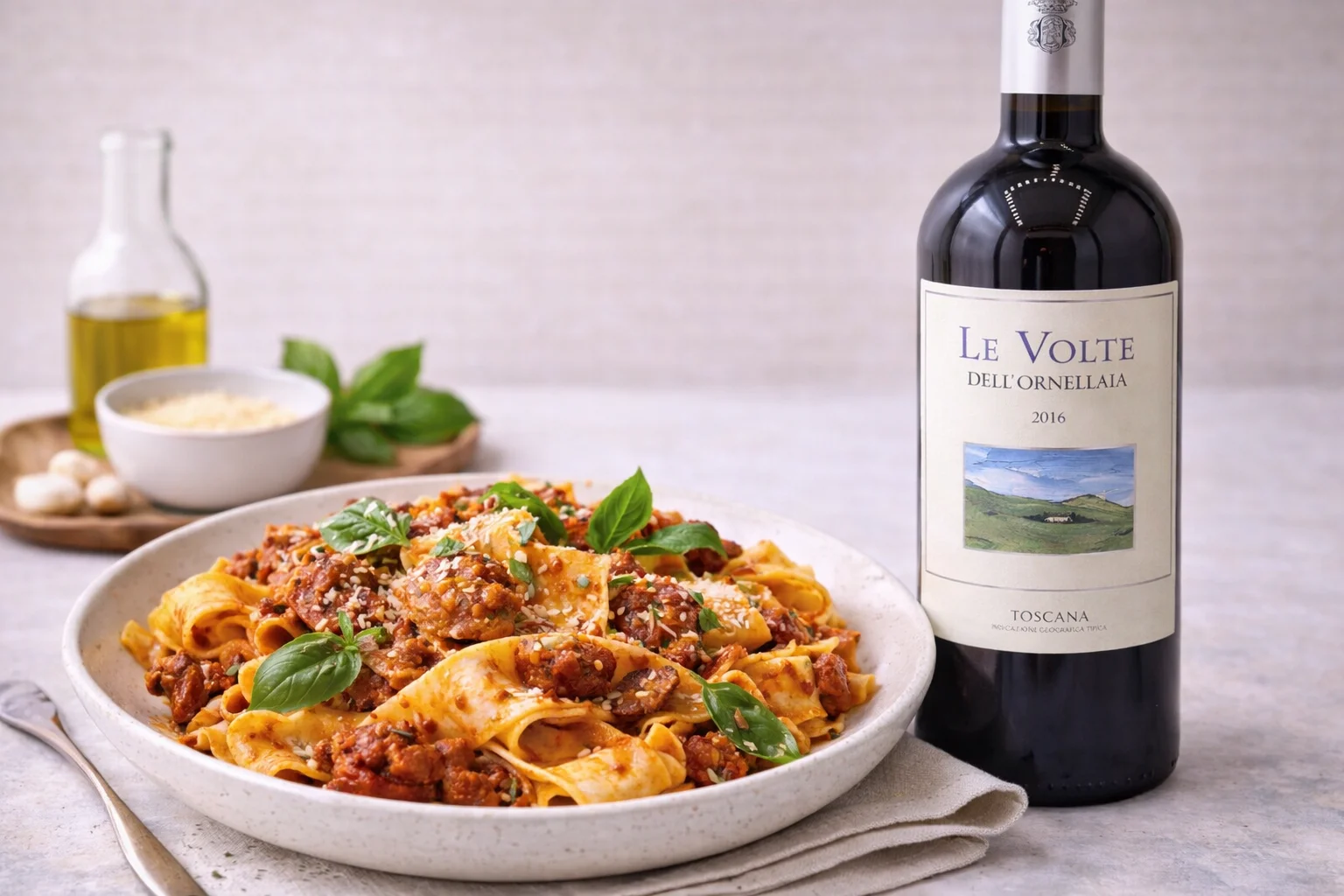
Why the sauce decides everything
Tomato and citrus ask for freshness. Cream, butter, and cheese want texture and calm acidity. Slow-cooked ragù needs structure and savoury length.
The key is balance: the wine should refresh the palate without sharpening the dish, and it should never outshine the delicate flavours on the plate.
Tomato-based sauce? Avoid heavy oak. Creamy or cheesy sauce? Avoid razor-sharp, ultra-mineral wines. Aim for harmony and connection, not friction.
Two styles that cover most pasta dishes
One path focuses on freshness for tomato and seafood; the other follows richness for cream, cheese, and ragù.
1. Bright: Fresh & Clean
For tomato sauces, pesto, and seafood pasta: wines with lively acidity and a clean finish that keeps every bite light.
- Ideal with: pomodoro, arrabbiata, pesto, vongole
- Profile: fresh, citrus, herbs, minimal oak
- Service: 9–11°C (white) or 12–14°C (light red)
2. Rich: Textured & Savoury
For creamy sauces and ragù: wines with more body and depth, balanced by acidity so the dish stays elegant.
- Ideal with: carbonara, truffle, mushroom cream, ragù
- Profile: textured, gentle spice, savoury length
- Service: 10–12°C (white) or 15–16°C (red)
Frequently asked questions
Can red work with tomato? Yes, if it is light and fruity. Tomato acidity can make heavy, tannic reds taste metallic or harsh.
What about spicy pasta? Choose lower alcohol and more primary fruit. Heavy oak and hard tannins amplify heat unnecessarily.
Operated by Dielen Wines (est. 1901) • Professional EU shipping