

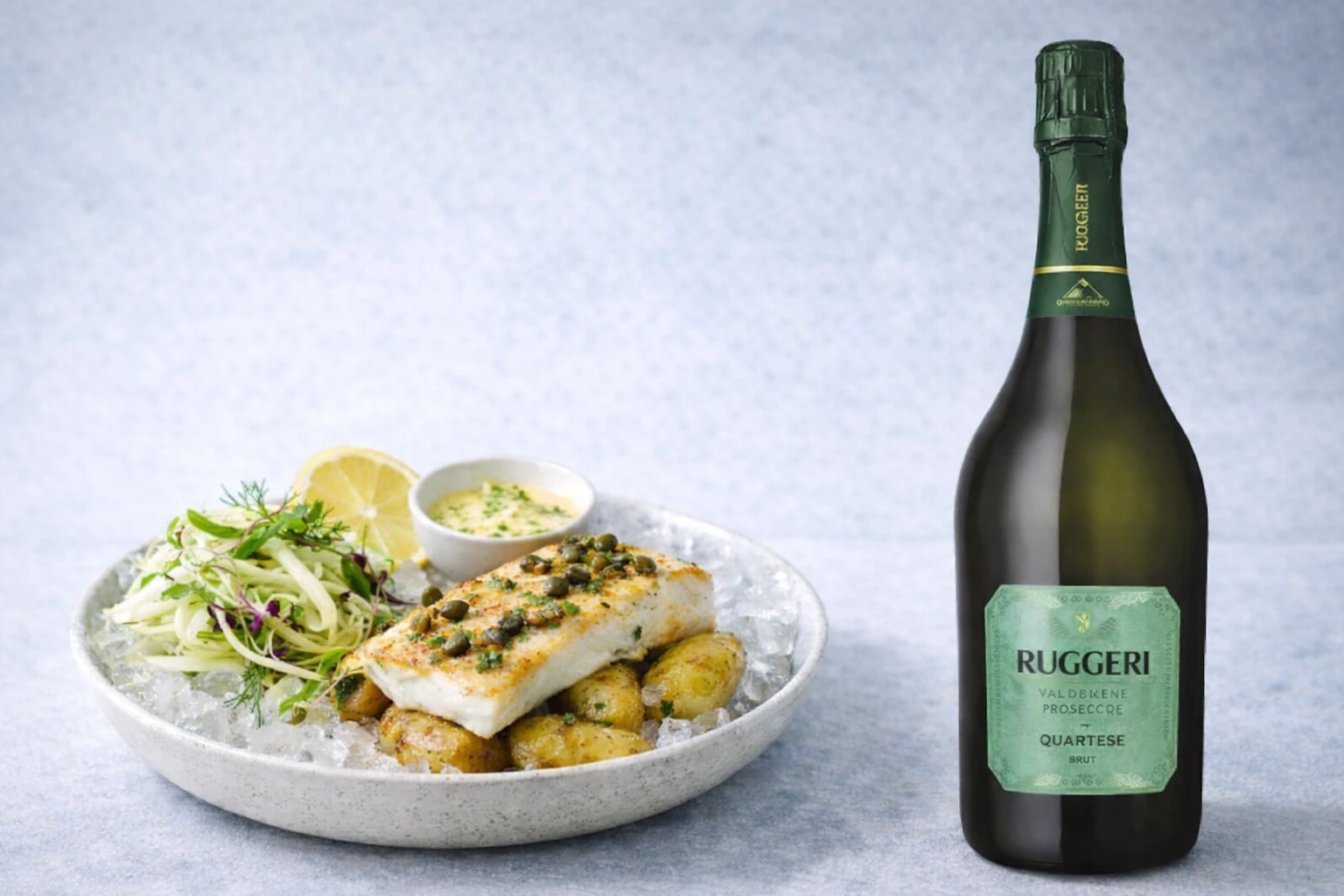
Seafood asks for freshness, not volume
“Seafood” is broad: salmon has richness, ceviche brings citrus, and seafood salads often include herbs. What they share is this: the pairing should feel bright and light.
Choose wines with clean acidity and a finish that resets the palate — the hallmark of professional restaurant-level seafood pairings.
If lemon, vinegar, or heavy citrus is present, avoid heavy oak and high alcohol. Freshness wins here — every time.
Two styles for the perfect balance
One path keeps everything crisp and mineral for lighter seafood; the other adds texture for richer fish and creamy elements.
1. Crisp: Fresh & Saline
For ceviche, shrimp, and grilled white fish: crisp wines with clean acidity and a “sea-breeze” finish.
- Ideal with: ceviche, prawns, seafood salad, white fish
- Profile: citrus, herbs, saline freshness, minimal oak
- Service: 8–10°C
2. Textured: Rich & Round
For salmon, lobster, or butter sauces: wines with more texture and depth, kept in line by balanced acidity.
- Ideal with: salmon, lobster, creamy pasta, butter sauces
- Profile: ripe fruit, subtle spice, controlled oak
- Service: 10–12°C
Frequently asked questions
Can red work with seafood? Occasionally with salmon or tuna, if the wine has soft tannins and is served cool. Whites and Champagne remain the cleanest choices.
What if there is lots of citrus? Prioritise crisp acidity and avoid oak. High alcohol and heavy oak make citrus taste sharp and less elegant.
Operated by Dielen Wines (est. 1901) • Professional EU shipping