

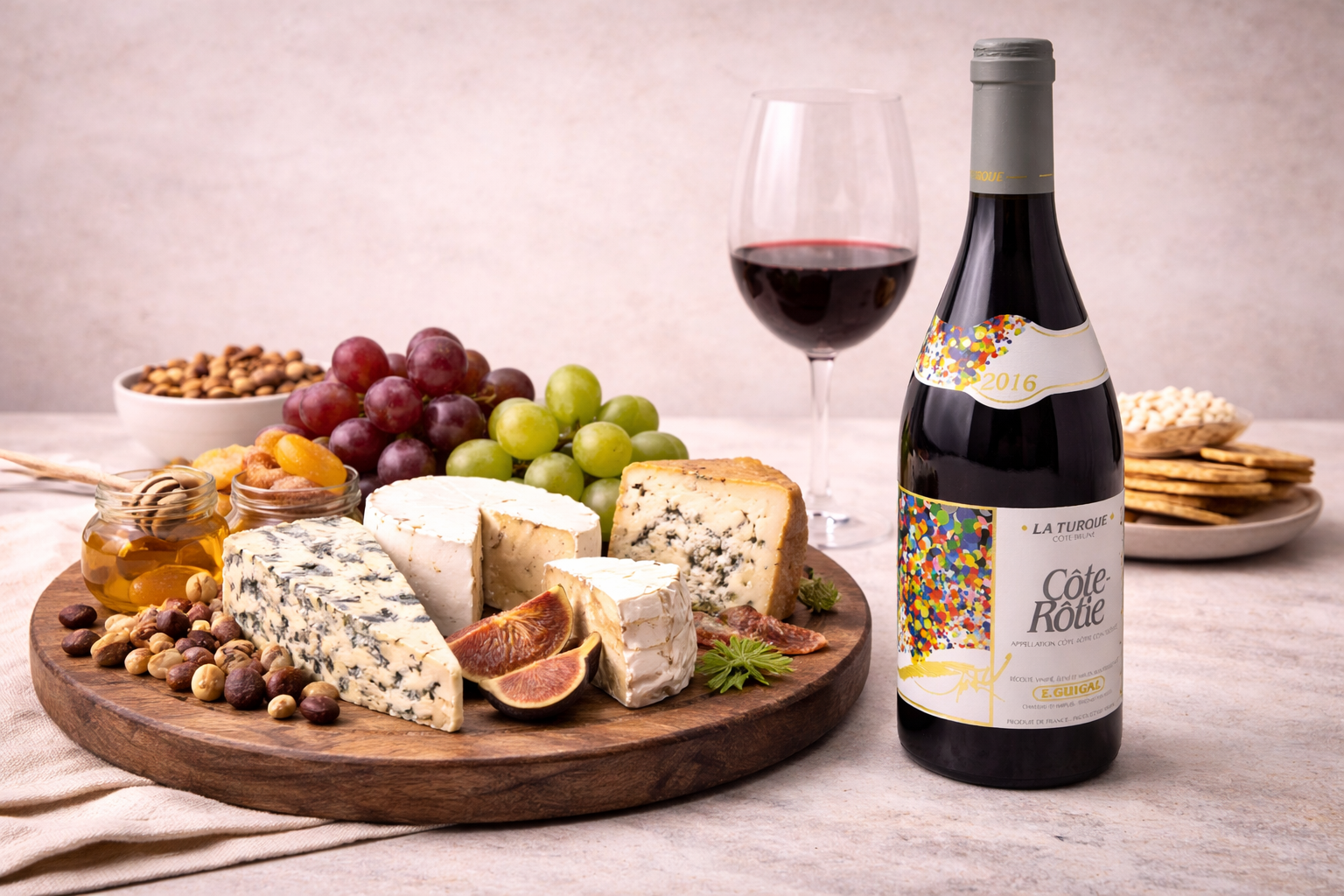
Why cheese is a precise pairing
Wine and cheese work because each element has a role: salt makes fruit brighter, fat softens acidity, and ripeness brings depth. This is why the same red can feel harsh next to one cheese and perfect next to another.
Texture is key: creamy cheeses ask for freshness; aged hard cheeses can carry structure; blue cheese often needs sweetness for harmony.
Serve cheese at room temperature. Cold cheese tastes salty and closed; warmer cheese shows aroma, and suddenly the wine pairing “clicks”.
Two routes for most cheese boards
A mixed board needs flexibility. These two approaches keep the experience refined.
1. Classic: Dry, fresh and elegant
Whites with texture, bright acidity, or refined sparkling wines. They lift creaminess and keep the palate clean.
- Ideal with: brie-style, goat cheese, young hard cheeses
- Style: dry, precise, with length
- Serving: 8–11°C (white) / Champagne not too cold
2. Harmonic: Sweet or fortified
For blue cheese and aged selections: sweetness creates immediate harmony, and fortified wines add warmth.
- Ideal with: blue cheese, aged & crystalline cheeses
- Style: balance, depth, not overly syrupy
- Serving: small pour, 10–14°C
Frequently asked questions
Is red wine always best? Not always. Whites often pair better as acidity lifts fat. Red works beautifully with aged, nutty cheeses.
What about blue cheese? Blue is powerful and salty. Sweetness or fortified wines create harmony; dry, tannic reds can feel harsh.
How to serve a mixed board? Start with a dry white or Champagne. Add one sweeter/fortified option if blue or aged cheeses are present.
Operated by Dielen Wines (est. 1901) • Professional EU wine shipping