

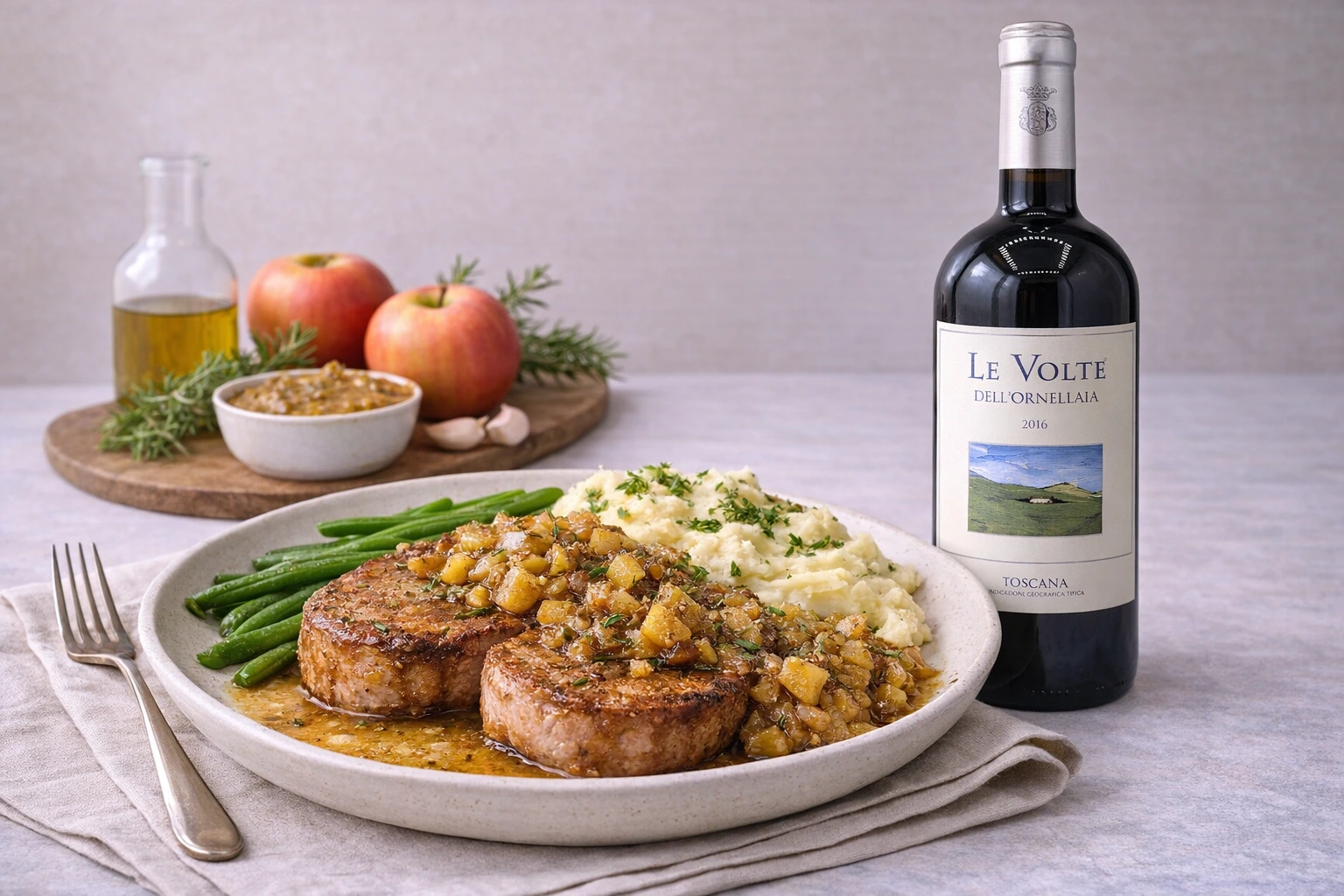
Why pork rewards smart wine choices
Pork sits between white and red meat. For fattier cuts, freshness is essential to lift the texture; for roasted or caramelised flavours, depth is required.
The richer the cut and darker the sauce, the more structure the wine can handle—provided the acidity remains lively to keep the pairing elegant.
For sweet glazes or apple-based sides: choose wines with ripe fruit and clear acidity. Avoid heavy tannins, as they can taste bitter when combined with pork fat.
Two styles that cover most pork dishes
Whether you choose a refined loin or rich pork belly, these two directions cover almost any preparation.
1. Fresh: White or Sparkling
Acidity "cuts" through fat and keeps the palate clean. Ideal for lighter sauces and bright combinations.
- Ideal with: schnitzel, pork loin, lightly sauced dishes
- Profile: crisp, dry, mineral or citrus-lifted
- Service: 8–10°C (sparkling) or 10–12°C (white)
2. Comfort: Ripe & Spicy Red
For roasted or slow-cooked cuts, wines with gentle tannins and savoury spice work best.
- Ideal with: pork belly, shoulder, BBQ-style sauces
- Profile: juicy, spicy, medium to full body
- Service: 15–17°C, short decant if needed
Frequently asked questions
Why do tannic reds fail? Pork fat combined with hard tannins can result in a bitter, drying effect. Focus on softer tannins and acidity.
Best serving temperature? Whites: 10–12°C. Sparkling: 8–10°C. Reds: 15–17°C to maintain freshness without alcohol heat.
Operated by Dielen Wines (est. 1901) • Professional EU shipping