

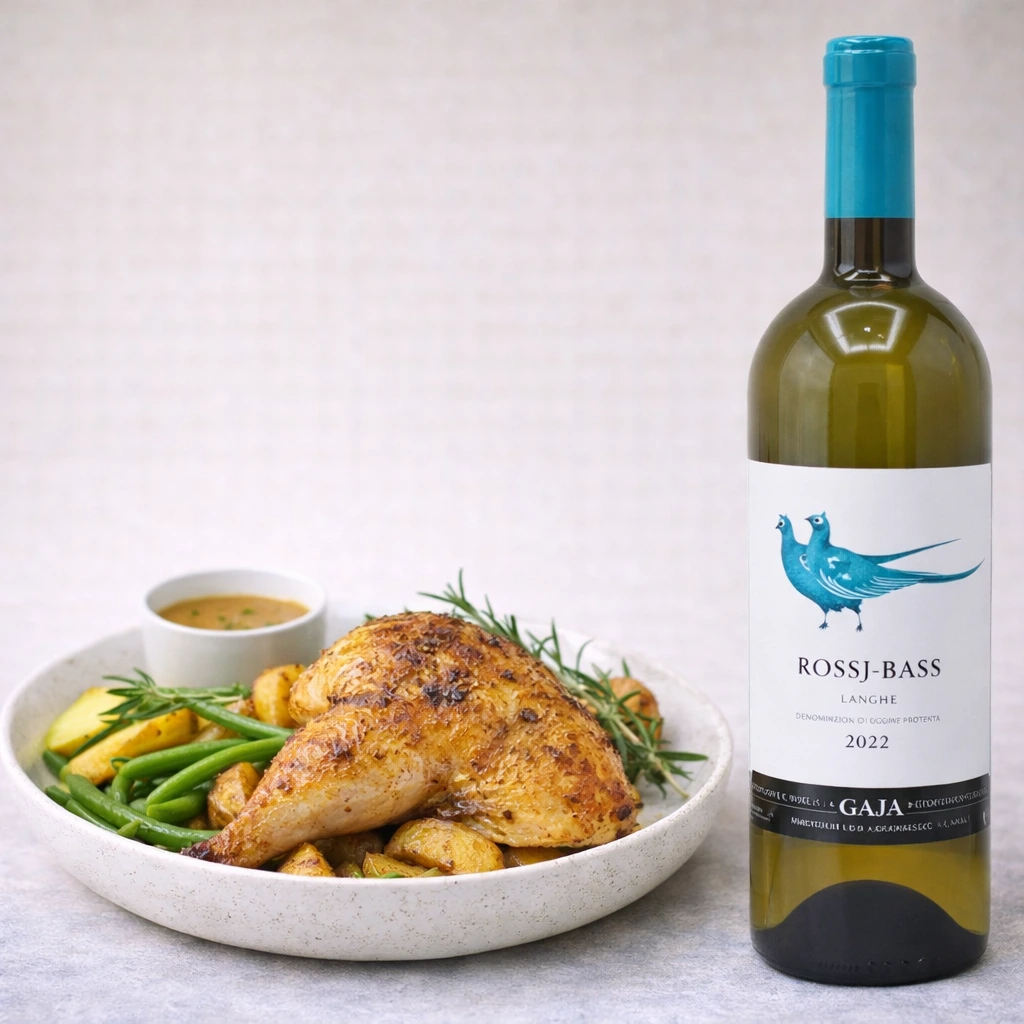
Why poultry is all about sauce and texture
The choice is rarely just "white or red" — it’s about preparation. Roasted skin brings nutty tones; creamy sauces demand freshness; herb-driven dishes ask for clarity and lift.
The more browned and roasted the dish, the more you can move towards richer whites or elegant reds—provided the acidity remains lively to keep the pairing precise.
If the sauce contains cream, butter, or mushrooms, avoid overly sharp wines. Choose texture: ripe fruit, gentle oak (if any), and balanced acidity for a harmonious mouthfeel.
Two styles that cover most poultry dishes
One route highlights freshness and finesse; the other follows roast depth and gentle red-fruit structure.
1. Elegant: Textured White
For roast chicken, turkey, and creamy sauces: a white with body, calm acidity, and a clean finish that respects the meat’s delicacy.
- Ideal with: roast chicken, turkey, creamy or herb sauces
- Profile: ripe, balanced, lightly creamy
- Service: 10–12°C, slightly larger glass
2. Roast: Light Red with Finesse
When the skin is deeply browned or the dish leans savoury, a refined red with soft tannin can be outstanding.
- Ideal with: crispy skin, mushroom notes, thyme, poultry jus
- Profile: soft tannin, red fruit, subtle spice
- Service: 14–16°C for optimal freshness
Frequently asked questions
Does poultry always mean white? No. With roasted skin and savoury depth, elegant reds like Pinot Noir work beautifully as long as tannins stay soft.
What about spicy marinades? Choose lower alcohol and more fruit. Avoid heavy oak and very tannic reds, as they can feel "hot" and drying with spice.
Operated by Dielen Wines (est. 1901) • Professional EU shipping