

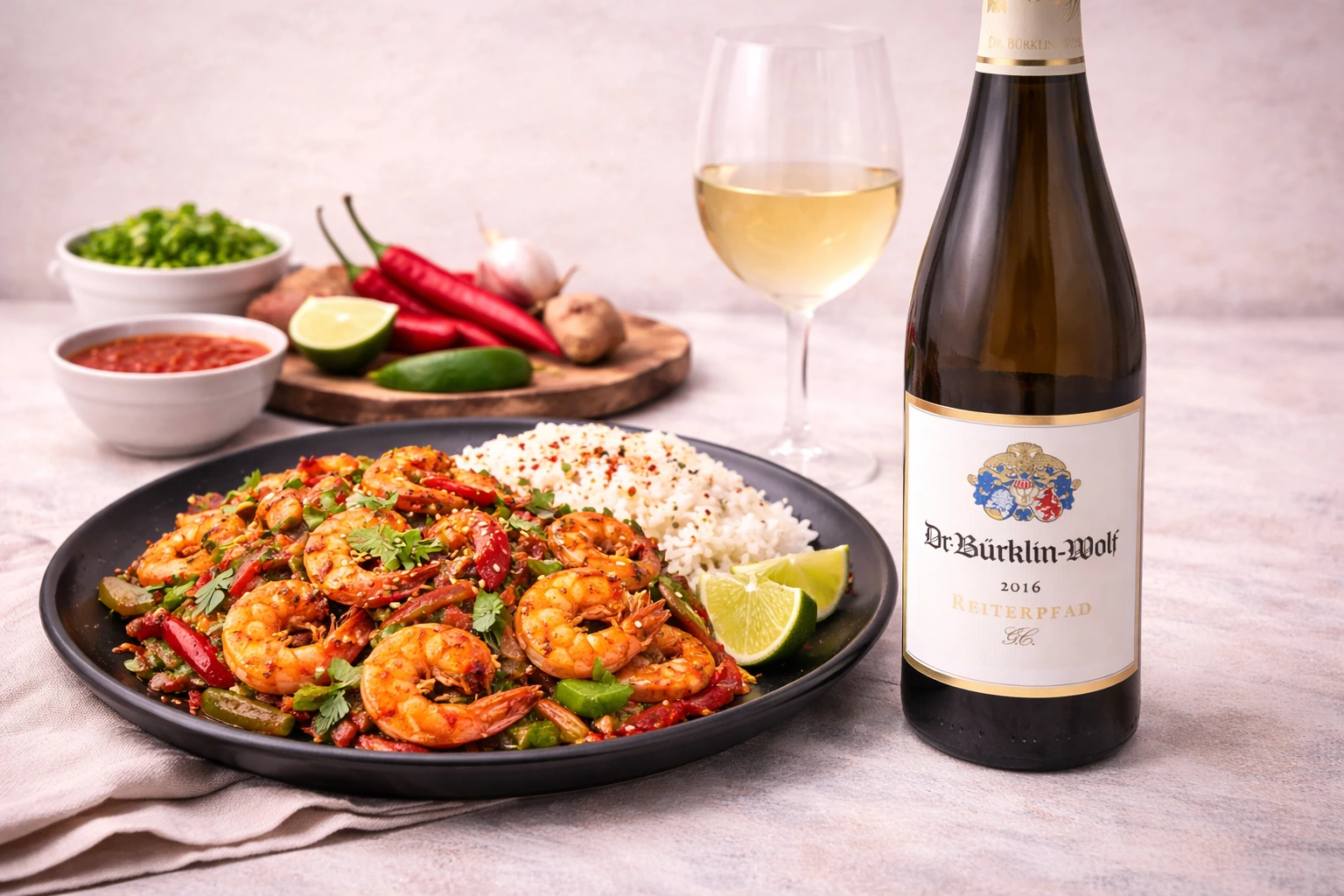
Heat changes how wine tastes
Chili amplifies alcohol and bitterness, often making heavy wines feel harsh. A strong pairing focuses on acidity, aroma, and texture while avoiding aggressive tannins.
Think of the wine as a "reset" between bites: it should refresh the palate and keep the spices fragrant, ensuring the heat doesn't become overwhelming.
Is it truly hot? Choose lower alcohol and serve slightly cooler. A small cushion of sweetness is the ultimate tool to tame heat without making the wine taste "dessert-like."
Two styles that rarely disappoint
One route is aromatic and dry for definition; the other uses a touch of sweetness or bubbles for maximum cooling effect.
1. Fresh & Aromatic: Dry Whites
Keeps flavours defined: citrus, ginger, and lemongrass stay vibrant without adding weight to the palate.
- Ideal with: Thai, Vietnamese, mild curries, spicy seafood
- Profile: aromatic, high acidity, minimal oak
- Service: 7–9°C
2. Balanced: Off-dry or Sparkling
For high heat, a lightly off-dry style is the most elegant solution. Bubbles scrub the palate and "reset" the mouth instantly.
- Ideal with: Szechuan, chili-based sauces, fried spicy dishes
- Profile: lower alcohol, gentle sweetness or crisp sparkling
- Service: 6–8°C (sparkling), 7–9°C (off-dry)
Frequently asked questions
Why do big reds fail? Heat makes alcohol and tannin feel aggressive. The wine can turn bitter and "hot," masking the dish's delicate aromas.
Does sweetness mean "sweet wine"? No. A small cushion of residual sugar is often unnoticeable as "sugar" but essential to calm the burn of chili peppers.
Operated by Dielen Wines (est. 1901) • Professional EU shipping