

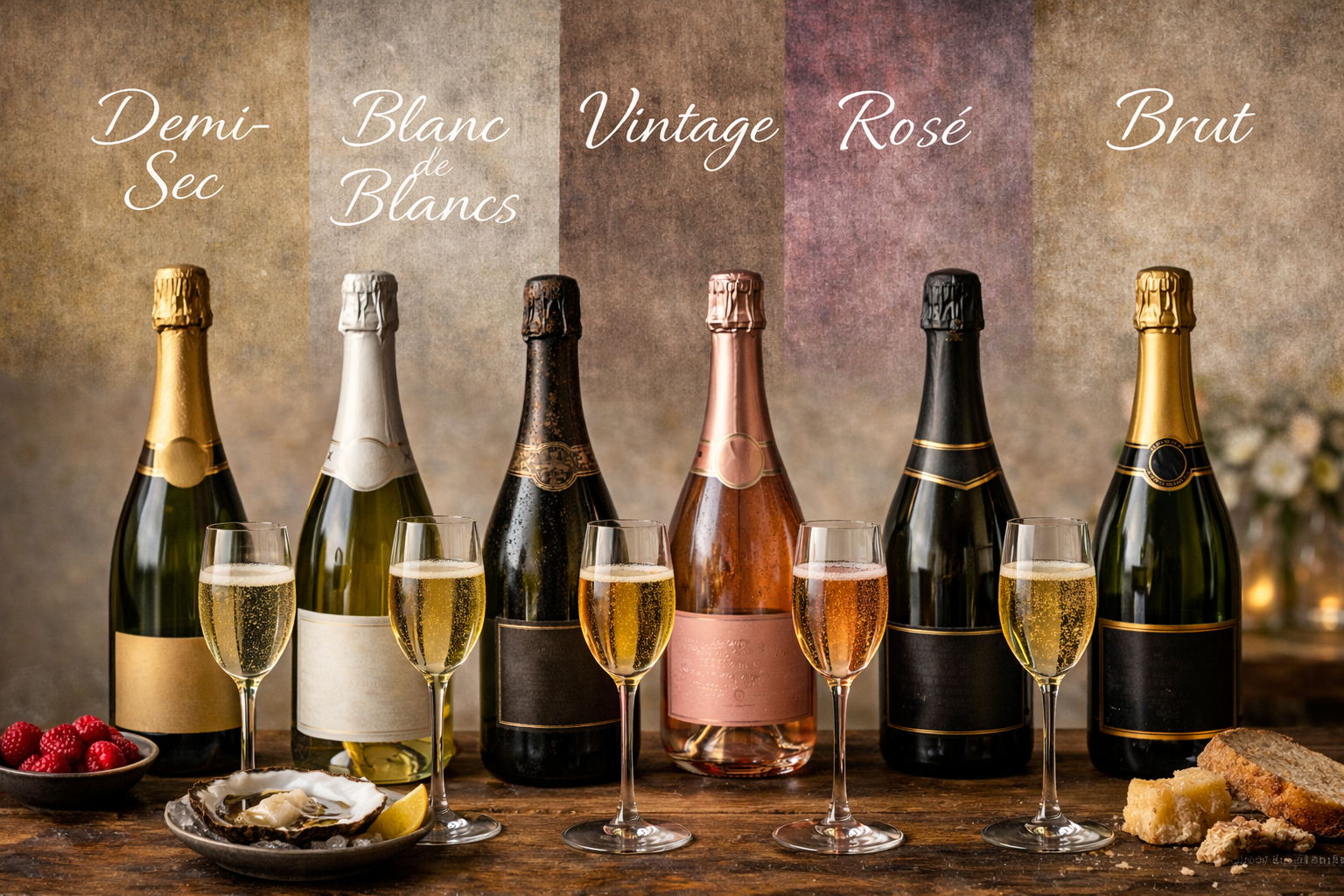
Champagne styles explained: Brut, Rosé, Vintage, Blanc de Blancs, Demi-Sec
Understanding Champagne Styles: The Key Types Explained
Champagne is not a single flavour. The differences come down to grape varieties, dosage (the sugar added after the second fermentation), ageing and each house’s stylistic choices. Once you understand the basics, it becomes much easier to pick a bottle that fits the moment and the food.
In this guide, we break down the most common Champagne styles. Click any style to explore our selections: Brut, Rosé Champagne, Blanc de Blancs, Blanc de Noirs, Vintage Champagne and Demi-Sec. For each style, you’ll find what to expect and when it’s a smart choice.
Brut Champagne
Brut is the reference point in Champagne. The word “Brut” refers to dosage: the amount of sugar added to bring balance. Brut remains dry, with enough tension and freshness to work across many occasions.
In the glass you’ll often find citrus, green apple and a light brioche note from ageing on lees. Great Brut feels tight but never harsh — that balance is exactly what makes it so appealing.
- Choose Brut as an aperitif or with oysters, sushi and light fish dishes.
- Also ideal when your guests have different taste preferences.
Rosé Champagne
Rosé is not just a colour — it often comes with a different texture, too. It can be made by blending a small amount of still red wine into the white base, or by brief skin contact. Either way, the result stays unmistakably Champagne, but with extra expression.
Expect red fruit (strawberry, raspberry, cherry), sometimes a subtle savoury spice, and a broader, more gastronomic feel. Rosé is often less “just aperitif” and more at home at the table.
- Choose Rosé with salmon, tuna, duck, charcuterie or umami-rich dishes.
- Perfect when you want Champagne to play the role of a food wine.
Blanc de Blancs
Blanc de Blancs is Champagne made exclusively from white grapes, typically Chardonnay. The style is often precise, mineral and focused. When young it can be very fresh and chalky; with age, notes of hazelnut and almond appear, and the texture turns creamier.
- Choose Blanc de Blancs when you want finesse and tension.
- Brilliant with shellfish and lighter sauces.
Blanc de Noirs
Blanc de Noirs is made from black grapes, most commonly Pinot Noir and/or Pinot Meunier. Gentle pressing keeps the wine white, but the style usually carries more structure and depth than Blanc de Blancs.
Typical flavours include riper apple, pear, stone fruit and a broader, sometimes spiced finish. This is Champagne for people who like a bit more body in the glass.
- Choose Blanc de Noirs with poultry, mushrooms and creamy dishes.
- Also a great bridge if you normally lean toward red wine.
Vintage Champagne
Vintage Champagne comes from a single harvest year. While non-vintage focuses on house style and consistency, vintage shows the character of the year — ripeness, tension and often a more distinct aromatic signature. Vintage is also typically aged longer, adding complexity.
- Choose vintage for milestones, gifts and moments where you want depth.
- Often better suited for cellaring.
Demi-Sec Champagne
Demi-sec carries noticeably more dosage than Brut. That doesn’t mean “candy-sweet”, but rather a rounder, softer style when the acidity is in balance. Demi-sec is a classic with desserts, yet it’s underrated as a festive choice for those who find very dry wines less enjoyable.
- Choose demi-sec with fruit desserts, pastries or soft cheeses.
- Also works as an alternative to dessert wine.
Which style fits your moment?
There is no single “best” Champagne — only the best fit. Brut is the safe all-rounder, Blanc de Blancs is precise and refined, Blanc de Noirs brings power and structure, Rosé is expressive and food-friendly, vintage adds depth and year character, and demi-sec is the right choice when you want a softer sweetness.
Approach Champagne this way and you’ll choose with more confidence — and enjoy every bottle more.


